Monsoon season brings much-needed rainfall, but it also exposes one of the biggest challenges for building owners—water leakage. Roof seepage, ceiling stains, structural damage, and costly repairs are common concerns in traditional construction. As businesses seek durable and low-maintenance infrastructure, Pre-Engineered Buildings (PEB) have emerged as a reliable solution that significantly reduces water leakage risks.
Understanding the Water Leakage Challenge
Water leakage can occur due to multiple factors, including poor roof design, cracked concrete surfaces, aging materials, and inadequate drainage systems. Over time, even minor leaks can lead to:
- Structural deterioration
- Mold and mildew growth
- Damage to equipment and inventory
- Increased maintenance expenses
- Reduced building lifespan
For warehouses, manufacturing units, logistics centers, and commercial facilities, water intrusion can result in operational disruptions and financial losses.
Traditional Buildings: Higher Leakage Risk
Traditional concrete and brick structures are more susceptible to water seepage due to:
1. Multiple Construction Joints
Conventional buildings contain numerous joints, cracks, and connection points that can allow water penetration over time.
2. Concrete Cracking
Temperature fluctuations, settlement, and aging can cause cracks in concrete slabs and roofs, creating pathways for water entry.
3. Complex Waterproofing Requirements
Traditional roofs require periodic waterproofing treatments, which may deteriorate and lose effectiveness over the years.
4. Increased Maintenance
Regular inspections, repairs, and waterproofing applications are necessary to prevent leakage-related issues.
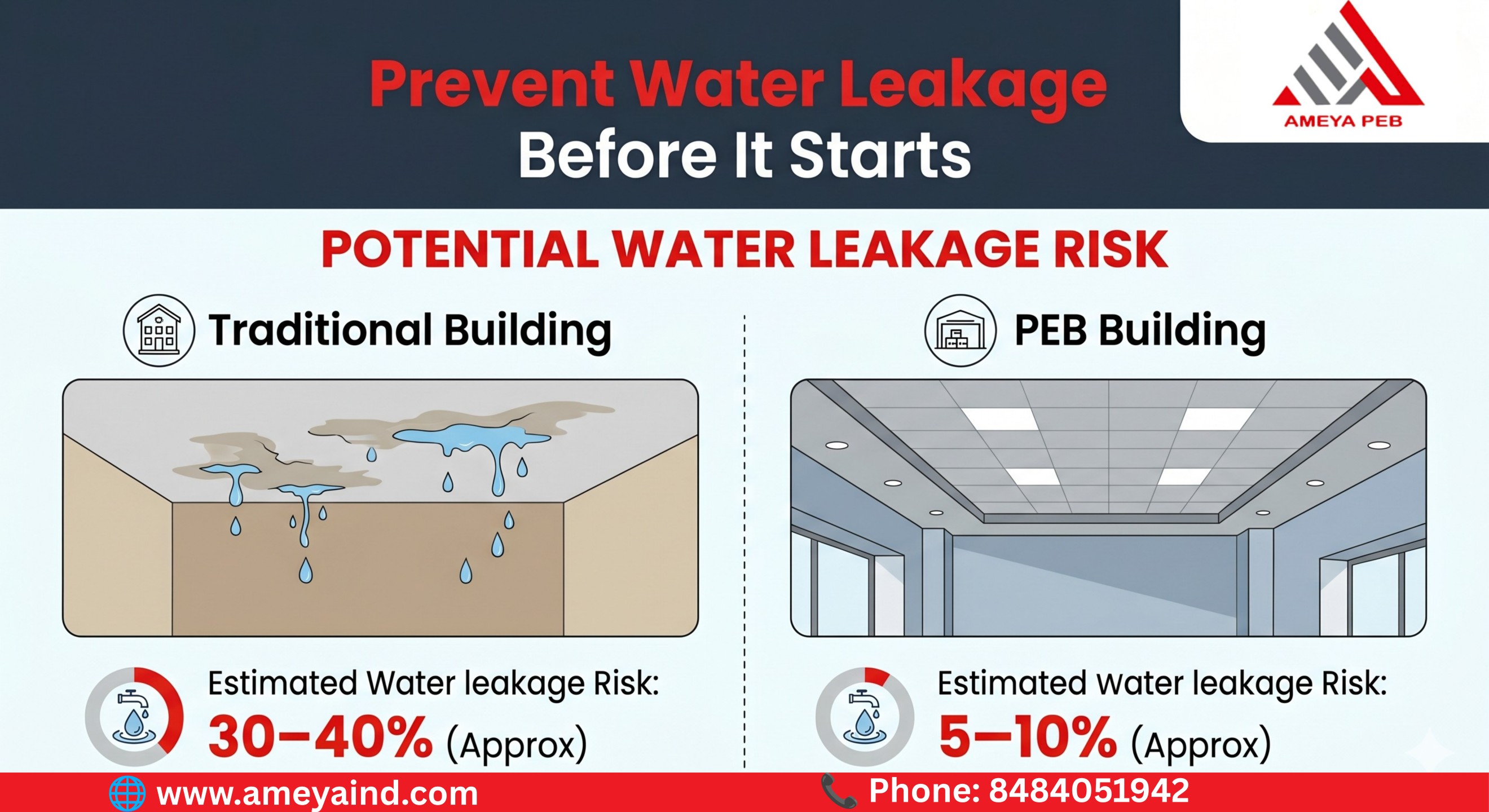
Estimated Water Leakage Risk: Approximately 30–40%, especially when maintenance is neglected.
PEB Buildings: Engineered for Weather Resistance
Pre-Engineered Buildings are designed with advanced materials and precision manufacturing, making them highly resistant to water leakage.
1. Precision-Engineered Roofing Systems
PEB roofs utilize factory-fabricated components that ensure accurate fitting and superior weather protection.
2. Advanced Sealing Technology
High-quality sealants, fasteners, and overlap systems help prevent water ingress even during heavy rainfall.
3. Efficient Drainage Design
PEB structures are designed with optimized roof slopes and drainage systems that quickly channel rainwater away.
4. Reduced Structural Cracks
Unlike conventional concrete roofs, steel-based PEB systems experience fewer cracking issues, minimizing leakage risks.
5. Lower Maintenance Costs
The durable design significantly reduces the need for frequent waterproofing and repair work.
Estimated Water Leakage Risk: Approximately 5–10%, making PEB buildings a more dependable choice for long-term performance.
Why Businesses Prefer PEB Structures
Modern industries are increasingly adopting PEB solutions because they offer:
- Faster construction timelines
- Lower maintenance requirements
- Enhanced durability
- Cost-effective building solutions
- Better protection against harsh weather conditions
- Improved operational reliability
These advantages make PEB buildings ideal for warehouses, factories, logistics parks, commercial complexes, and industrial facilities.
Monsoon-Proof Your Infrastructure
Choosing the right building system is crucial for protecting assets, operations, and investments. While traditional buildings may face ongoing leakage and maintenance challenges, PEB structures provide a robust, weather-resistant alternative designed for long-term performance.
Investing in a Pre-Engineered Building is not just about faster construction—it is about creating a durable, low-maintenance, and monsoon-ready structure that stands strong year after year.
PEB building advantages, water leakage prevention, monsoon-ready buildings, pre-engineered buildings, industrial shed construction, warehouse waterproofing, steel building solutions, weather-resistant structures, PEB construction company, industrial building maintenance.