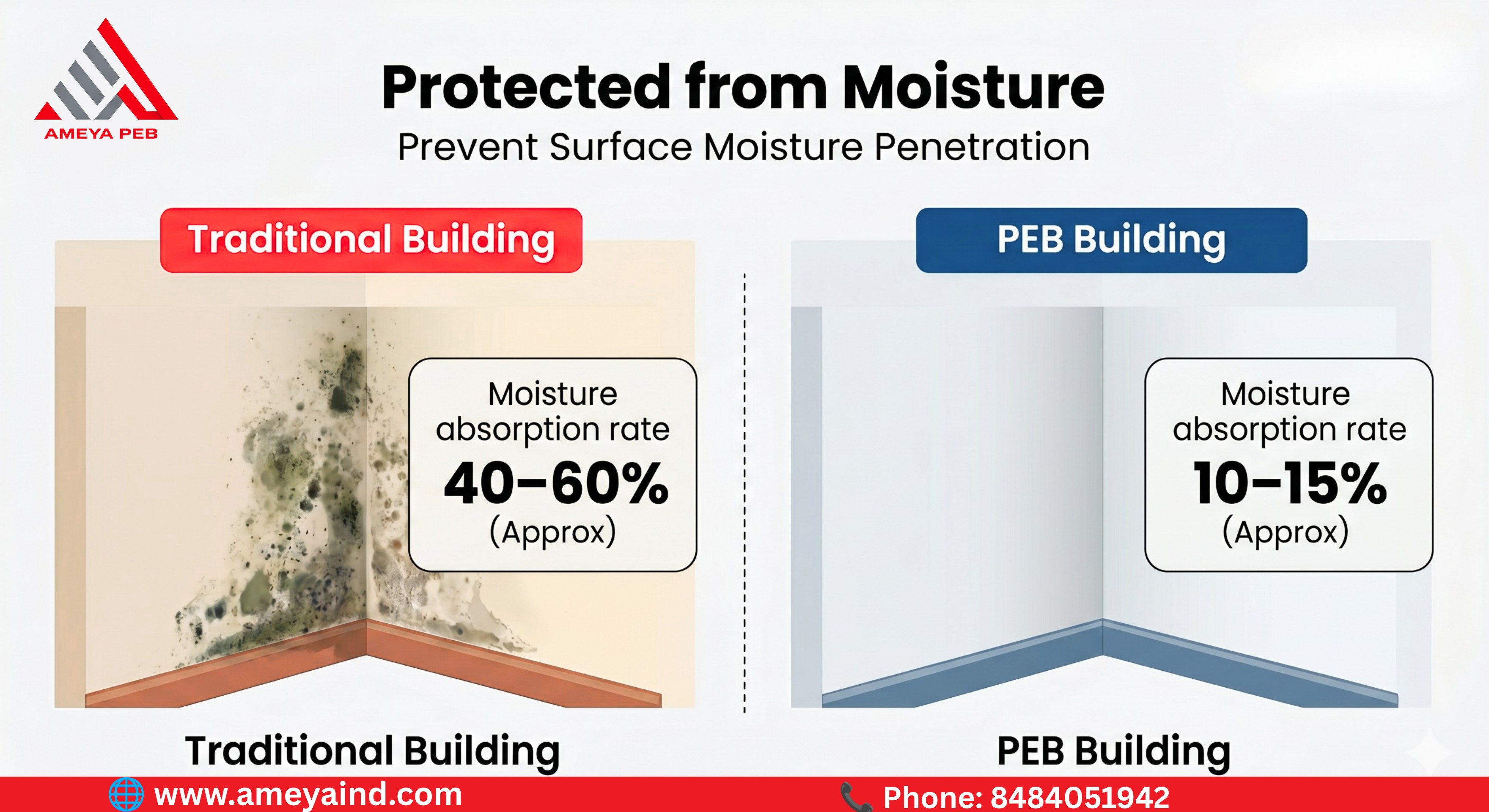
Monsoon season brings much-needed rainfall, but it also exposes one of the biggest challenges faced by conventional buildings—surface moisture penetration. Excess moisture can lead to damp walls, mold growth, structural deterioration, and increased maintenance costs. The image highlights a clear comparison between Traditional Buildings and Pre-Engineered Buildings (PEB), showcasing how PEB structures provide superior protection against moisture-related damage.
Understanding Surface Moisture Penetration
Surface moisture penetration occurs when water seeps into walls, roofs, and structural components through cracks, porous materials, or poorly sealed joints. Over time, this moisture accumulation can weaken the building envelope and create an unhealthy indoor environment.
Common Effects of Moisture Penetration
- Mold and fungal growth
- Paint peeling and discoloration
- Corrosion of structural components
- Reduced insulation performance
- Increased repair and maintenance costs
- Compromised building durability
Traditional Buildings: Higher Moisture Absorption Risk
Traditional construction methods often rely on materials such as brick, cement, and concrete, which are naturally porous. These materials absorb and retain moisture, especially during prolonged exposure to rain and humidity.
According to the comparison shown, traditional buildings can experience a moisture absorption rate of approximately 40–60%. This higher absorption rate can result in:
- Damp and stained walls
- Mold formation in corners and hidden areas
- Structural weakening over time
- Frequent maintenance requirements
- Reduced building lifespan
The visible mold growth depicted in the image is a common consequence of excessive moisture retention in conventional structures.
PEB Buildings: Engineered for Moisture Resistance
Pre-Engineered Buildings are designed using high-quality steel components and advanced protective coatings that significantly reduce moisture penetration. The image indicates a moisture absorption rate of only 10–15%, making PEB structures far more resistant to water-related issues.
Benefits of PEB Buildings During Monsoon
1. Superior Moisture Protection
PEB structures use precision-engineered panels, weatherproof cladding systems, and sealed joints that minimize water ingress.
2. Mold and Mildew Prevention
Lower moisture absorption reduces the likelihood of mold growth, helping maintain a cleaner and healthier indoor environment.
3. Enhanced Structural Durability
Steel components with protective coatings resist corrosion and maintain structural integrity even in high-humidity conditions.
4. Reduced Maintenance Costs
With fewer moisture-related issues, building owners spend less on repairs, repainting, and waterproofing treatments.
5. Longer Building Life
PEB buildings are designed to withstand harsh weather conditions, ensuring long-term performance and reliability.
Why Industries Prefer PEB Structures
Industrial facilities, warehouses, logistics centers, manufacturing plants, and commercial buildings increasingly choose PEB solutions because they offer:
- Faster construction timelines
- Cost-effective installation
- Weather-resistant performance
- Low lifecycle maintenance
- Sustainable building solutions
- Improved operational efficiency
The Smart Choice for Monsoon-Proof Infrastructure
When comparing moisture resistance, the advantage of Pre-Engineered Buildings is clear. While traditional buildings may absorb up to 60% moisture under challenging conditions, PEB structures maintain significantly lower absorption rates, protecting both the building and its occupants.