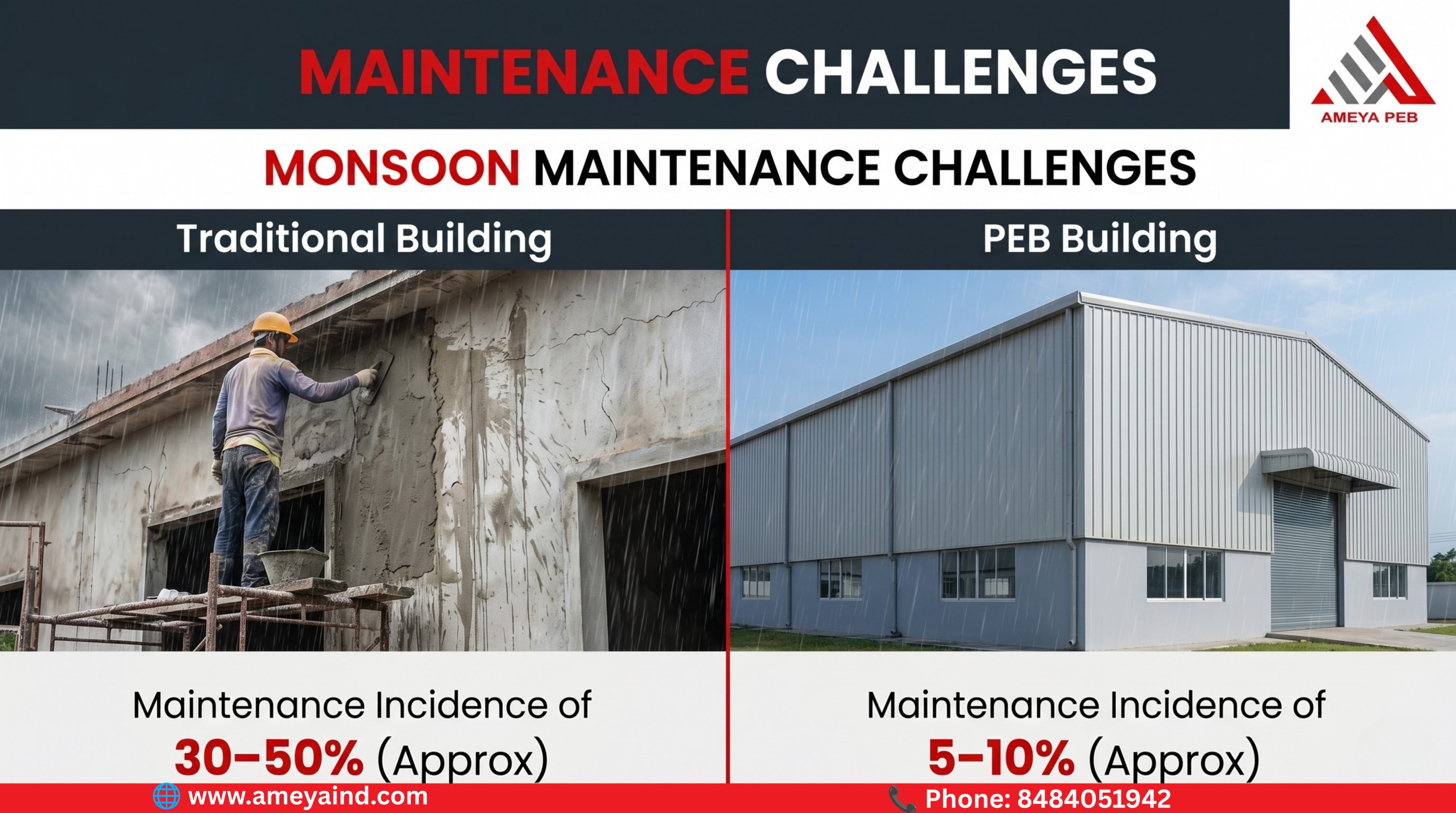
The monsoon season brings much-needed rainfall, but it also exposes the weaknesses of poorly maintained buildings. Water seepage, cracks, damp walls, corrosion, and recurring repair costs are common issues faced by traditional structures during heavy rains. The image highlights a significant difference in maintenance requirements between Traditional Buildings and Pre-Engineered Buildings (PEBs), showing why modern industries are increasingly choosing PEB solutions.
Understanding Monsoon Maintenance Challenges
Heavy rainfall can cause serious damage to conventional buildings. Moisture penetrates through cracks, weak joints, and damaged surfaces, leading to structural deterioration over time. Regular maintenance becomes essential to prevent costly repairs and operational disruptions.
According to the comparison shown in the image:
- Traditional Buildings experience approximately 30–50% maintenance incidence during monsoon conditions.
- PEB Buildings experience only 5–10% maintenance incidence, thanks to their engineered design and weather-resistant construction.
This difference directly impacts long-term maintenance costs, operational efficiency, and building lifespan.
Why Traditional Buildings Face Higher Maintenance Issues
1. Wall Cracks and Water Seepage
Concrete and masonry structures often develop cracks over time. During monsoons, these cracks allow water infiltration, causing dampness, mold growth, and surface damage.
2. Frequent Plaster Repairs
Rainwater exposure can weaken plastered surfaces, resulting in peeling paint, surface erosion, and recurring repair work.
3. Structural Deterioration
Continuous moisture exposure can affect reinforcement steel and concrete integrity, increasing maintenance requirements and repair expenses.
4. Higher Lifecycle Costs
Regular inspections, waterproofing treatments, repainting, and crack repairs add significantly to the overall lifecycle cost of traditional buildings.
Why PEB Buildings Perform Better During Monsoons
1. Weather-Resistant Design
PEB structures are engineered with high-quality steel components and advanced roofing systems designed to withstand harsh weather conditions.
2. Superior Water Drainage
Properly designed gutters, downpipes, and roof slopes ensure efficient rainwater management, reducing the risk of water accumulation and leakage.
3. Reduced Maintenance Requirements
Factory-manufactured components ensure precision and consistency, minimizing defects that could lead to maintenance issues.
4. Corrosion Protection
Modern PEBs utilize galvanized and coated steel components that offer enhanced protection against rust and corrosion.
5. Long-Term Durability
PEB structures maintain their strength and appearance for years with minimal upkeep, making them an ideal choice for industrial and commercial applications.
Key Benefits of Low-Maintenance PEB Buildings
- Lower annual maintenance costs
- Better resistance to water leakage
- Faster post-monsoon recovery
- Improved structural reliability
- Longer building lifespan
- Reduced operational downtime
- Enhanced return on investment
Industries Benefiting from PEB Construction
PEB buildings are widely used across:
- Warehouses
- Manufacturing Plants
- Logistics Hubs
- Cold Storage Facilities
- Distribution Centers
- Commercial Buildings
- Agricultural Storage Facilities
Their low-maintenance nature makes them especially valuable in regions experiencing heavy seasonal rainfall.
How to Prepare Any Building for Monsoon Season
Even with a durable structure, proactive maintenance is important:
- Inspect roofs and gutters before the rainy season.
- Check fasteners, joints, and flashing systems.
- Ensure proper drainage around the building.
- Repair minor leaks immediately.
- Conduct periodic structural inspections.
- Apply protective coatings where required.
Monsoon Maintenance Challenges, PEB Building Benefits, Pre-Engineered Buildings, Industrial Building Maintenance, Monsoon-Proof Buildings, Warehouse Construction, Steel Building Solutions, Low Maintenance Industrial Buildings, PEB vs Traditional Buildings, Weather Resistant Structures.