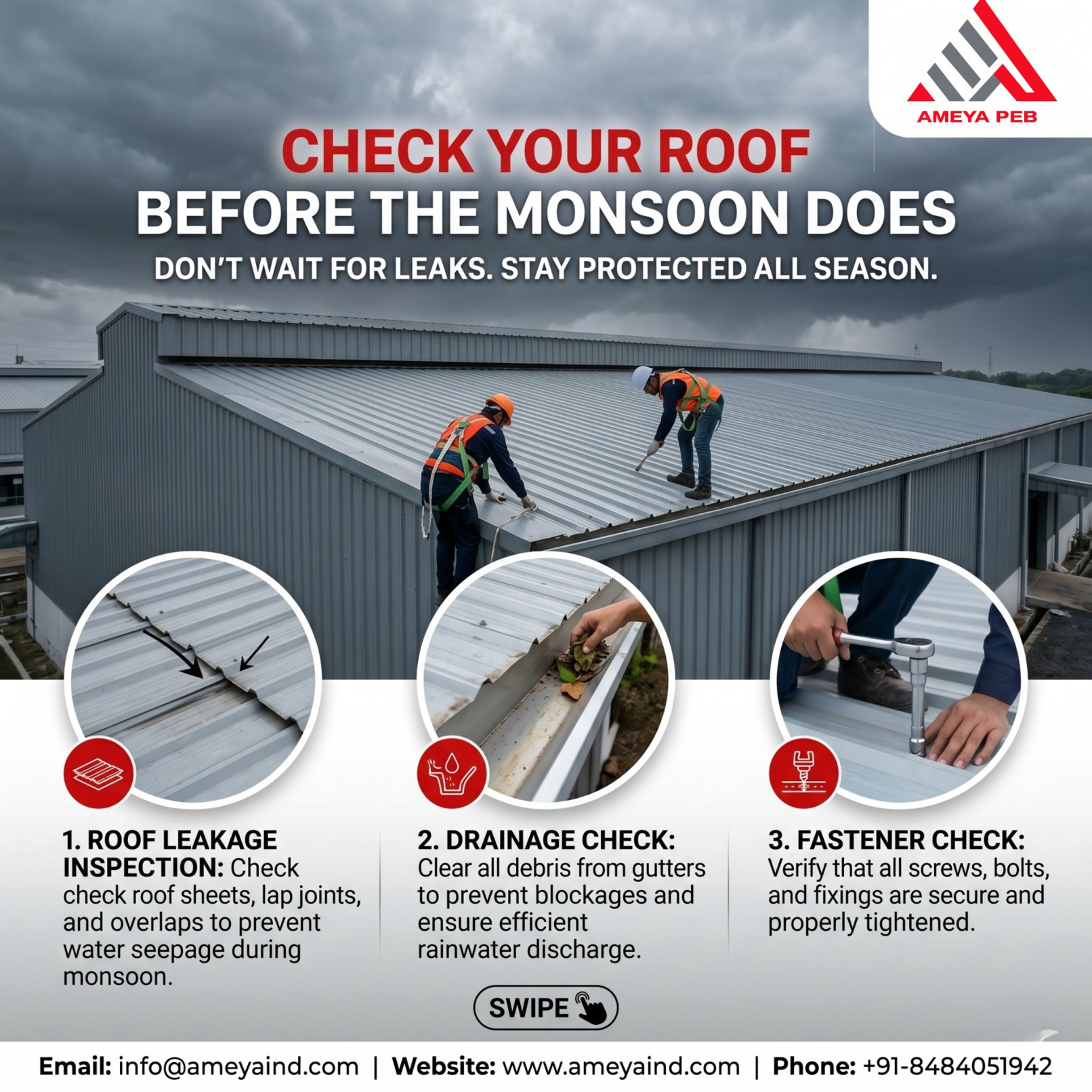
As dark clouds gather and the monsoon season approaches, your building's roof becomes the first line of defense against heavy rainfall, moisture, and water seepage. A small issue today can quickly turn into expensive repairs tomorrow. Whether you own a warehouse, factory, commercial building, or pre-engineered structure, conducting a roof inspection before the monsoon can save significant time, money, and operational disruptions.
Why Pre-Monsoon Roof Inspection Matters
Monsoon rains can expose hidden weaknesses in roofing systems. Water leakage, blocked drainage systems, and loose fasteners are among the most common causes of structural damage during the rainy season. Regular inspections help identify these issues early and ensure your building remains safe, dry, and operational.
1. Roof Leakage Inspection
One of the most critical steps before the monsoon is checking for potential leakage points.
What to Inspect:
- Roof sheets and metal panels
- Lap joints and overlaps
- Flashings and sealants
- Skylight connections
- Previous repair areas
Why It Matters:
Even a minor gap can allow water to seep into the structure, leading to:
- Interior damage
- Corrosion of steel components
- Reduced insulation efficiency
- Production downtime in industrial facilities
Regular inspection helps detect vulnerable areas before heavy rains begin.
2. Drainage System Check
A properly functioning drainage system is essential for managing rainwater effectively.
What to Inspect:
- Gutters and downpipes
- Rainwater outlets
- Roof valleys
- Debris accumulation
Why It Matters:
Leaves, dirt, and debris can block water flow, causing water to accumulate on the roof. Standing water increases the risk of:
- Roof leaks
- Structural stress
- Premature roof deterioration
Cleaning gutters and ensuring smooth drainage can significantly improve roof performance during heavy rainfall.
3. Fastener and Fixing Inspection
Fasteners play a vital role in maintaining the structural integrity of metal roofing systems.
What to Inspect:
- Roofing screws
- Bolts and nuts
- Clamps and brackets
- Loose or damaged fixings
Why It Matters:
Strong winds and changing weather conditions can loosen fasteners over time. Loose fixings may lead to:
- Roof panel movement
- Water ingress
- Increased maintenance costs
Tightening and replacing damaged fasteners helps maintain a secure and weather-resistant roof.
Additional Monsoon Roof Maintenance Tips
Check for Rust and Corrosion
Inspect metal surfaces for signs of rust, corrosion, or paint deterioration. Treat affected areas promptly to prevent structural weakening.
Examine Roof Sealants
Ensure all sealants around joints, vents, and roof penetrations remain flexible and intact.
Inspect Structural Components
Check purlins, trusses, and support members for signs of wear, deformation, or damage.
Schedule Professional Maintenance
A comprehensive inspection by experienced roofing professionals can identify issues that may not be visible during routine checks.
Benefits of Pre-Monsoon Roof Maintenance
✔ Prevents water leakage and seepage
✔ Extends roof lifespan
✔ Reduces repair and maintenance costs
✔ Protects inventory and equipment
✔ Improves building safety and reliability
✔ Minimizes operational disruptions
Why Pre-Engineered Buildings (PEBs) Perform Better During Monsoon
Modern Pre-Engineered Buildings are designed with weather-resistant roofing systems, efficient drainage solutions, and durable fastening mechanisms. When maintained properly, PEB structures offer superior protection against heavy rainfall, moisture, and harsh weather conditions, making them an ideal choice for industrial and commercial applications.
Pre-Monsoon Roof Inspection, Roof Maintenance Tips, Industrial Roofing Solutions, PEB Roof Maintenance, Warehouse Roof Inspection, Water Leakage Prevention, Metal Roof Maintenance, Monsoon Building Protection, Roof Drainage Check, Fastener Inspection, Commercial Roofing Services, Pre Engineered Buildings India, Monsoon Roof Care, Industrial Building Maintenance, Roofing Solutions India.