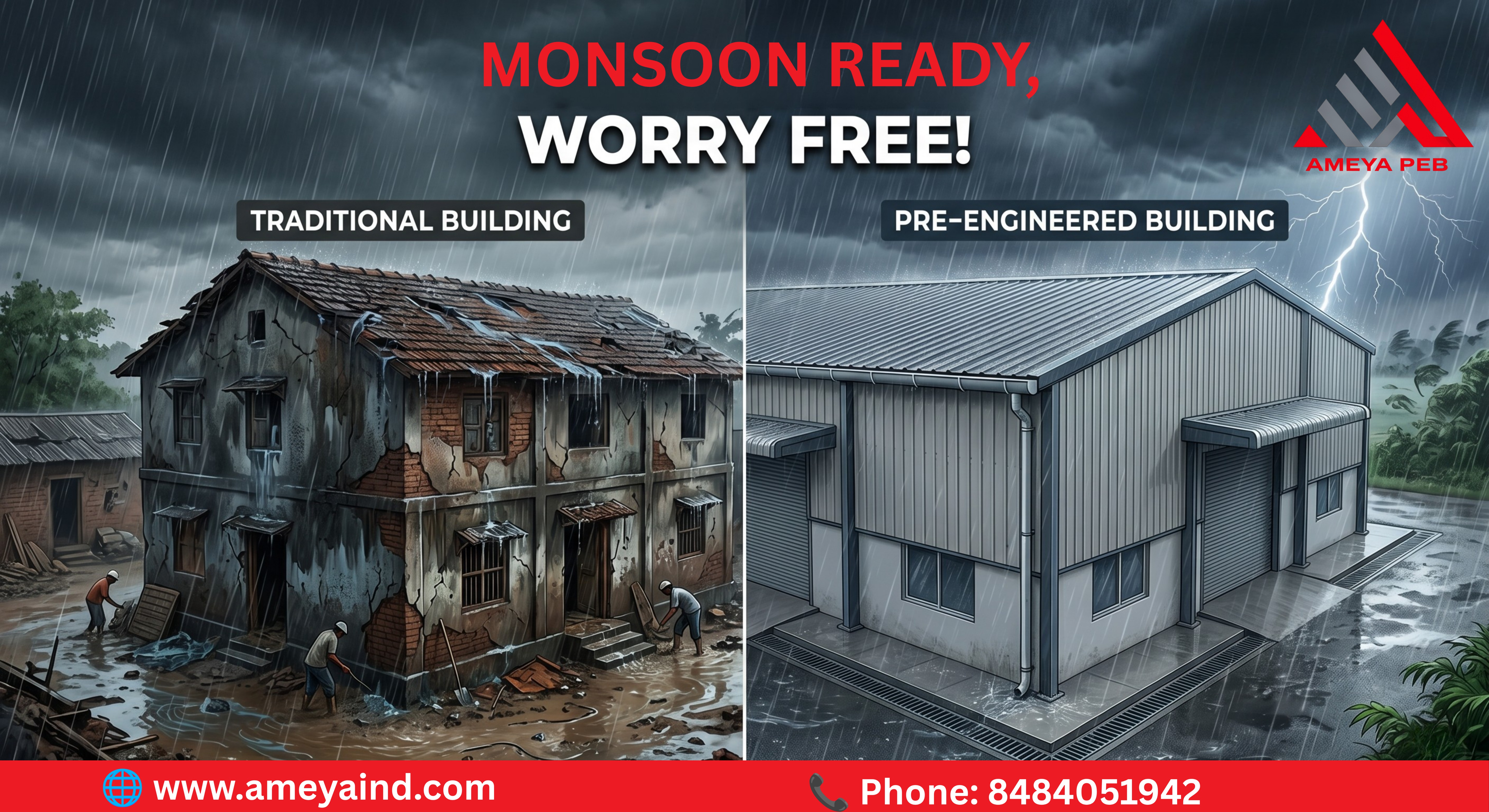
The arrival of the monsoon brings much-needed relief from the heat, but it also exposes the weaknesses of poorly designed and aging structures. Water leakage, damp walls, rust, structural deterioration, and costly repairs become common concerns for property owners. The comparison in the image highlights a clear reality: while traditional buildings often struggle to withstand harsh weather conditions, Pre-Engineered Buildings (PEBs) are designed to perform efficiently even during heavy rainfall.
The Monsoon Challenge for Traditional Buildings
Traditional construction methods can face several issues when exposed to continuous rain and moisture:
1. Water Leakage and Seepage
Cracks in walls, damaged roofing, and aging construction materials allow rainwater to penetrate the structure, leading to leaks and damp interiors.
2. Structural Deterioration
Constant exposure to moisture can weaken building components over time, causing cracks, corrosion, and reduced structural integrity.
3. High Maintenance Costs
Frequent repairs, waterproofing treatments, and maintenance activities increase operational expenses, especially during every monsoon season.
4. Business and Operational Disruptions
For industrial facilities, warehouses, and commercial buildings, water damage can impact inventory, equipment, and daily operations.
Why Pre-Engineered Buildings Are Monsoon-Ready
Pre-Engineered Buildings are designed with advanced engineering principles and high-quality materials to withstand challenging weather conditions.
Superior Weather Resistance
PEBs utilize precision-manufactured roofing and wall systems that provide enhanced protection against rainwater penetration and leakage.
Efficient Drainage Systems
Well-designed gutters, downpipes, and roof slopes ensure quick water drainage, preventing water accumulation and structural stress.
Corrosion-Resistant Components
Modern coatings and protective treatments help safeguard steel structures from rust and environmental damage, extending the building's lifespan.
Faster Construction, Better Quality
Factory-manufactured components ensure consistency, accuracy, and quality control, resulting in a more reliable structure.
Reduced Maintenance Requirements
Compared to conventional buildings, PEBs require significantly less maintenance, reducing long-term ownership costs.
Key Benefits of Choosing a PEB for Industrial Infrastructure
✔ Leak-resistant roofing systems
✔ Enhanced structural durability
✔ Faster project completion timelines
✔ Lower maintenance and repair costs
✔ Better protection for equipment and inventory
✔ Long-term operational reliability
✔ Sustainable and cost-effective construction
Building for Every Season
A building is not just an investment for today—it is a long-term asset that must perform throughout every season. With increasing weather uncertainties and heavy rainfall patterns, businesses need infrastructure that delivers durability, safety, and peace of mind.
Pre-Engineered Buildings offer a smart, modern solution that minimizes monsoon-related risks while maximizing operational efficiency. Whether it's a warehouse, manufacturing facility, logistics center, or commercial building, choosing a PEB means choosing resilience, reliability, and long-term value.