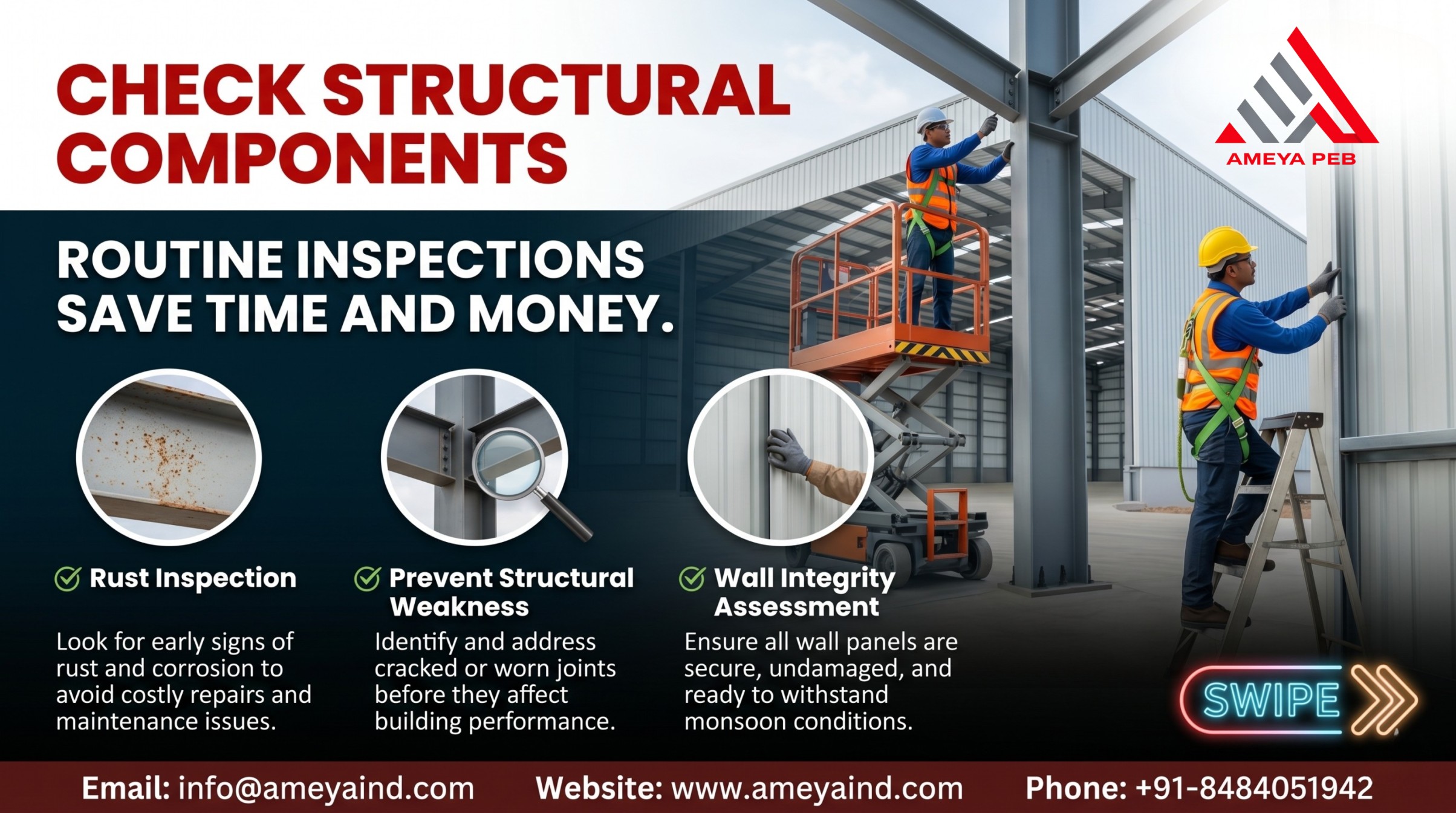
Monsoon season can put tremendous stress on industrial buildings, warehouses, factories, and commercial structures. While Pre-Engineered Buildings (PEBs) are designed for durability and performance, regular inspections are essential to ensure they remain safe, efficient, and weather-resistant throughout the year.
Routine structural inspections help identify minor issues before they become major repair expenses. By proactively monitoring critical building components, businesses can protect their investments, reduce downtime, and extend the lifespan of their facilities.
Why Structural Inspections Matter
A well-maintained building performs better, lasts longer, and requires fewer costly repairs. Environmental factors such as rain, humidity, wind, and temperature fluctuations can gradually impact structural components. Regular inspections allow facility managers to detect and address these issues early.
Benefits of Routine Inspections
- Prevent costly structural repairs
- Enhance building safety and reliability
- Improve long-term durability
- Minimize operational disruptions
- Ensure readiness for monsoon conditions
- Protect valuable equipment and inventory
1. Rust Inspection
Steel structures are highly durable, but prolonged exposure to moisture can lead to corrosion if left unchecked.
What to Look For:
- Surface rust on steel members
- Corrosion around joints and fasteners
- Water accumulation points
- Paint or coating deterioration
Why It Matters:
Early detection of rust prevents structural weakening and reduces future maintenance costs. Protective coatings and timely repairs can significantly extend the life of the building.
2. Prevent Structural Weakness
Structural joints, connections, and framing members are critical to the overall stability of a building.
Inspection Areas:
- Bolted and welded connections
- Beam-to-column joints
- Bracing systems
- Roof support structures
Why It Matters:
Cracks, loose connections, or worn components can gradually affect building performance. Identifying these issues early helps maintain structural integrity and avoids expensive emergency repairs.
3. Wall Integrity Assessment
Wall panels serve as a protective barrier against weather, moisture, and external impacts.
Check For:
- Dents or visible damage
- Loose wall panels
- Gaps between panels
- Signs of water ingress
- Sealant deterioration
Why It Matters:
Properly secured and undamaged wall panels help protect the interior environment and ensure the structure can withstand heavy rains and strong winds during monsoon season.
Monsoon Maintenance Checklist for PEB Structures
Before the rainy season begins, ensure the following:
✔ Inspect steel components for rust and corrosion
✔ Check all structural joints and connections
✔ Examine wall panels for damage or looseness
✔ Verify roof drainage systems are functioning properly
✔ Tighten fasteners and support members
✔ Repair damaged protective coatings
✔ Seal any gaps that may allow water penetration
Invest in Preventive Maintenance
Preventive maintenance is always more cost-effective than major structural repairs. Regular inspections help businesses maintain operational efficiency, improve safety, and maximize the return on their infrastructure investment.
At Ameya PEB, we believe that routine inspections are a key part of maintaining high-performance structures. By addressing potential issues before they escalate, organizations can ensure their buildings remain strong, safe, and ready for every season.
Structural Inspection, PEB Maintenance, Pre-Engineered Building Inspection, Rust Inspection, Wall Integrity Assessment, Structural Safety, Monsoon Building Maintenance, Industrial Building Maintenance, Warehouse Inspection, Steel Structure Maintenance, Preventive Building Maintenance, Ameya PEB.